United Martial Arts Center · Fort Myers
Taekwondo Classes in Fort Myers
Tae Kwon Do builds strength, discipline and respect. Learn it from a 9th Dan Grand Master's school.
UMAC has taught Tae Kwon Do in south Fort Myers since 1989. Classes run every weekday afternoon and evening for kids, teens and adults, from first-day white belts to black belts. Tae Kwon Do is part of our core curriculum alongside Ko Am Mu Do and Hap Ki Do, so students learn kicks and forms plus practical self-defense.
Taekwondo Classes at UMAC
- Kids and teens: Basic Club and Black Belt Club classes Monday to Friday, 3:00 to 7:10 PM, and Saturday mornings. See the class schedule.
- Ages 4–7: start with Tiny Eagles.
- Adults: evening classes Monday, Wednesday and Friday at 7:20 PM in our adult program.
- Instructors: Master David Torres and the UMAC team, under founder Grand Master Noah Guak, who holds a Grand Master degree in Tae Kwon Do and has been on the cover of Tae Kwon Do Times three times.
- Not sure which class fits? The class finder picks one by age.
- Your first class is free. Call (239) 433-2299 to book it.
The History of Tae Kwon Do
Tae Kwon Do is a traditional Korean martial art that emphasizes dynamic kicks, powerful strikes, and disciplined self-defense techniques. Rooted in respect, perseverance, and self-control, it builds both physical strength and strong character in its practitioners.
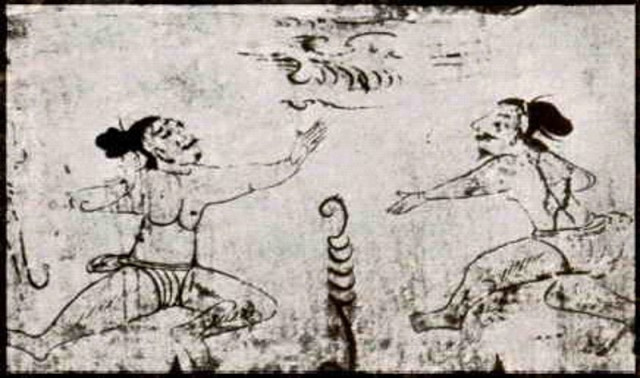
Tae Kwon Do grew out of fighting skills Koreans have practiced for about 2,000 years. The old names for these skills were subak and taekkyon. People trained them for self-defense, for fitness and for contests at festivals.
The Three Kingdoms
Long ago, Korea was split into three kingdoms: Koguryo, Paekje and Silla. Each one needed strong soldiers. Young warriors trained in taekkyon along with other lessons.
In Koguryo these young warriors were called sonbae. In Silla they were called hwarang. Old tomb paintings from Koguryo show two fighters facing each other in a taekkyon stance. A statue from Silla shows a fist shaped just like the fist used in Tae Kwon Do today.
The Koryo Dynasty (918 to 1392)
Koryo made taekkyon a required test for anyone who wanted to be a military officer. Kings held contests and promoted the best fighters. Some ordinary soldiers became generals this way.
Later, gunpowder and new weapons made bare-hand fighting less important to the army. Taekkyon lived on as a folk game.
The Chosun Dynasty and Japanese Rule (1392 to 1945)
The Chosun kings cared more about books than fighting. Still, local officials held contests to pick soldiers. A book of martial arts drawings, the Muyedobo-Tongji, shows 38 hand-fighting moves. Many look like today's Tae Kwon Do forms.
When Japan ruled Korea, it banned taekkyon and other folk games. A few masters kept teaching in secret until Korea was freed in 1945.
Modern Tae Kwon Do
After 1945, Korean masters opened schools all over the country. Korea named Tae Kwon Do its national martial art in 1971. The Kukkiwon, its world headquarters in Seoul, opened in 1972. The World Taekwondo Federation followed in 1973, the same year as the first World Championships.
Thousands of Korean masters went abroad to teach. Tae Kwon Do became an official Olympic sport at the Sydney 2000 Games, and it has been part of every Summer Olympics since.
Explore More at UMAC
Join us for a free class
Ready to Start? Let's Grow Together.
Whether your child needs confidence, structure, or a place to belong, or you're an adult looking for fitness with purpose, UMAC is here to help.